Gardner’s Art Through the Ages, Volume 2 (16th Edition PDF): A Comprehensive Plan
Gardner’s, in its 16th edition, offers a global art history, with PDF versions available, covering Renaissance through contemporary periods, and including scholarly contributions.

Gardner’s Art Through the Ages stands as a cornerstone textbook in the field of art history, renowned for its comprehensive scope and detailed analysis. The 16th edition, available in PDF format, continues this tradition, offering a global perspective on artistic development. This volume, specifically Volume 2, delves into pivotal periods and movements, providing students and scholars with an invaluable resource.
The text’s enduring appeal lies in its ability to synthesize complex information into an accessible narrative. It’s frequently utilized within Arts, History, Philosophy, and Politics degree programs, serving as foundational material for academic study. The availability of the PDF version facilitates convenient access to this wealth of knowledge, though caution is advised regarding unauthorized downloads, as legitimate sources are preferred to ensure quality and avoid potential risks. The book’s influence extends to ethnographic studies, as noted in related academic works.
II. Understanding the 16th Edition
The 16th edition of Gardner’s Art Through the Ages builds upon decades of scholarship, incorporating recent archaeological discoveries and evolving art historical methodologies. While maintaining its core strengths, this edition reflects contemporary perspectives on global art history. Accessing the material in PDF format offers portability and ease of research, but users should prioritize legitimate download sources to guarantee authenticity and avoid potential malware.
This updated version benefits from contributions from a distinguished editorial board, including scholars like A.A. Guusev, Evandro Agazzi, and V;I; Arshinov. The text continues to explore the intricate relationship between art and its historical context, including the crucial role of patronage. Understanding the nuances of this edition is vital for students navigating curriculum requirements in various disciplines, from Arts to Politics.
III. Accessing the PDF Version

Obtaining the Gardner’s Art Through the Ages, Volume 2 (16th Edition) in PDF format requires careful consideration. Numerous online sources advertise downloads, but verifying legitimacy is paramount. Unauthorized downloads pose risks, potentially exposing users to viruses or incomplete, inaccurate content. Prioritize official publisher platforms or reputable educational resource providers for secure access.
While ebook PDF versions are available, ensuring they are complete chapters is crucial for academic use. Be wary of sites offering “full chapters” without clear provenance. The availability of the text, alongside resources like the study of the Military Gallery of the Winter Palace, highlights the interconnectedness of art historical research. Responsible access safeguards both your digital security and academic integrity.
III.A. Legitimate Sources for PDF Download
Accessing a legal PDF copy of Gardner’s Art Through the Ages, Volume 2 (16th Edition) typically involves purchasing it through the publisher’s official website or authorized online booksellers. Many university libraries also offer digital access to textbooks, including Gardner’s, for enrolled students. Educational institutions subscribing to digital learning platforms frequently include the textbook in their resources.
Checking with your course instructor for recommended or provided digital access points is also advisable. Beware of websites promising free downloads, as these often violate copyright laws and may contain compromised files. Prioritizing legitimate sources ensures you receive a complete, accurate, and legally obtained version of this essential art history text, supporting scholarly work.
III.B. Potential Risks of Unauthorized Downloads
Downloading Gardner’s Art Through the Ages, Volume 2 (16th Edition) from unofficial sources carries significant risks. These downloads frequently violate copyright laws, potentially leading to legal repercussions for the user. More critically, unauthorized PDFs often contain malware, viruses, or other malicious software that can compromise your device and personal data.
Furthermore, illegally obtained copies may be incomplete, contain errors, or lack crucial supplementary materials. This can severely hinder academic study and research. Supporting legitimate sources ensures the integrity of the content and protects you from digital threats. Prioritize ethical access and safeguard your digital security by avoiding unauthorized downloads.
IV. Volume 2: Historical and Geographical Scope
Gardner’s Art Through the Ages, Volume 2 (16th Edition) primarily focuses on the art produced from the Renaissance onward, extending into the modern and contemporary periods; Geographically, the volume expands beyond Europe, incorporating increasing coverage of non-Western artistic traditions, aligning with a global historical perspective.
It delves into the artistic developments across Italy and Northern Europe during the Renaissance, then progresses through the Baroque and Rococo eras. The text also examines significant artistic movements and styles that emerged globally, offering a broader understanding of art history. This edition reflects a commitment to inclusivity and a comprehensive view of artistic expression worldwide.
V. Key Periods Covered in Volume 2
Gardner’s Art Through the Ages, Volume 2 (16th Edition) meticulously examines pivotal art historical periods. The Renaissance, both in Italy and Northern Europe, receives substantial attention, showcasing the shift towards humanism and classical ideals. Following this, the dramatic and emotive Baroque period is thoroughly explored, highlighting artists like Bernini.
The volume also dedicates significant space to the elegant and ornate Rococo style. Beyond these, it extends to encompass 19th and 20th-century art, including Realism, Impressionism, and modern movements. This comprehensive coverage provides a robust understanding of art’s evolution, contextualized within broader historical and cultural shifts.
V.A. Renaissance Art (Italy & Northern Europe)
Gardner’s Art Through the Ages dedicates extensive coverage to the Renaissance, meticulously differentiating between the Italian and Northern European expressions. In Italy, the focus lies on the rediscovery of classical antiquity, exemplified by artists striving for ideal proportions and perspective. The volume details the High Renaissance masters and their groundbreaking achievements.

Northern Renaissance art, conversely, is presented as possessing a distinct character, emphasizing realism, meticulous detail, and often, religious symbolism. Gardner’s explores how patronage influenced artistic production in both regions, shaping the themes and styles prevalent during this transformative period, offering a comparative analysis.
V.B; Baroque Art
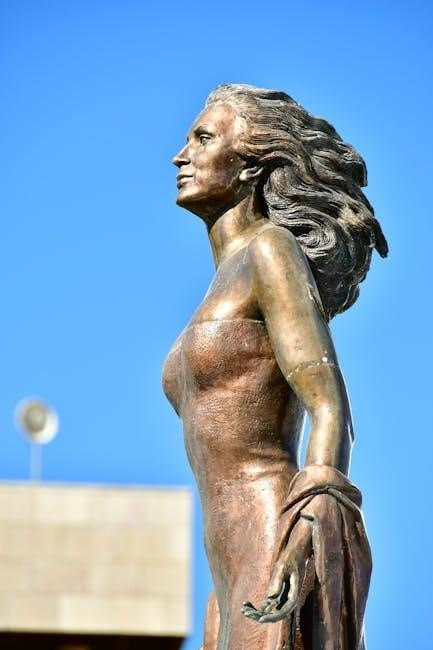
Gardner’s Art Through the Ages thoroughly examines Baroque art, characterizing it as a dramatic and emotionally charged style emerging in the 17th century. The text details how Baroque artists utilized dynamic compositions, intense light and shadow (tenebrism), and opulent ornamentation to evoke powerful responses from viewers.

Gardner’s explores the Baroque’s development in Italy, with detailed analyses of Bernini’s sculptures and the architectural grandeur of Roman churches. It also traces the spread of Baroque aesthetics to Northern Europe, noting regional variations and the influence of local traditions; The volume highlights the role of the Counter-Reformation in shaping Baroque artistic themes, particularly those emphasizing religious fervor and divine power.

V.C. Rococo Art
Gardner’s Art Through the Ages presents Rococo as an 18th-century style evolving from Baroque, yet distinctly characterized by its elegance, playfulness, and intimate scale. The text emphasizes Rococo’s shift away from the dramatic intensity of the Baroque towards lighter, more decorative forms, often associated with aristocratic life and leisure.
Gardner’s meticulously details Rococo’s flourishing in France, particularly within the court of Louis XV, showcasing artists like Watteau and Boucher. It explores the style’s influence on interior design, furniture, and the decorative arts, highlighting the use of pastel colors, delicate ornamentation, and asymmetrical compositions. The volume also examines Rococo’s spread across Europe, noting its adaptation to different cultural contexts.
VI. Major Artists Featured in Volume 2
Gardner’s Art Through the Ages, 16th Edition, dedicates significant coverage to pivotal artists shaping Western art history. Volume 2 prominently features Michelangelo, analyzing his sculptures like David and the Sistine Chapel ceiling, emphasizing his mastery of anatomy and dramatic composition.
Bernini’s Baroque dynamism is explored through works like Ecstasy of Saint Teresa, showcasing his theatricality and integration of sculpture, architecture, and painting. Rembrandt’s profound psychological portraits and innovative use of light and shadow are also central, with detailed analysis of paintings like The Night Watch.
Gardner’s contextualizes these artists within their historical and cultural frameworks, examining patronage, artistic influences, and lasting legacies.
VI.A. Michelangelo
Gardner’s Art Through the Ages provides extensive analysis of Michelangelo’s multifaceted career, positioning him as a High Renaissance master. The text meticulously examines his sculptures, notably David, highlighting its anatomical precision and embodiment of Renaissance humanism. Detailed discussion extends to the Sistine Chapel ceiling, dissecting the complex narrative scenes and innovative fresco technique.
Gardner’s explores Michelangelo’s architectural contributions, including his work on St. Peter’s Basilica, and his poignant late sculptures reflecting a shift towards Mannerism. The volume contextualizes his art within the political and religious climate of Florence and Rome, emphasizing the influence of patronage and classical ideals.
VI.B. Bernini
Gardner’s Art Through the Ages dedicates significant attention to Gian Lorenzo Bernini, a pivotal figure of the Baroque period. The textbook thoroughly analyzes his sculptural masterpieces, such as Ecstasy of Saint Teresa, emphasizing the dramatic use of light, texture, and theatricality characteristic of Baroque art. Gardner’s details Bernini’s architectural achievements, including his design for St. Peter’s Square, showcasing his ability to integrate sculpture and architecture.
The volume explores Bernini’s role as a court artist for Urban VIII, highlighting the influence of papal patronage on his artistic output. Gardner’s contextualizes his work within the Counter-Reformation, demonstrating how his art served to inspire religious fervor and reaffirm the power of the Catholic Church.

VI.C. Rembrandt
Gardner’s Art Through the Ages provides extensive coverage of Rembrandt van Rijn, a master of the Dutch Golden Age. The textbook meticulously examines his innovative use of chiaroscuro – the dramatic contrast between light and dark – to create emotionally resonant and psychologically complex portraits and narrative paintings. Gardner’s details key works like The Night Watch and numerous self-portraits, analyzing their compositional techniques and symbolic meanings.
The volume explores Rembrandt’s development as an artist, tracing his stylistic evolution and his exploration of human emotion. Gardner’s contextualizes his work within the social and religious climate of 17th-century Holland, highlighting the rise of Protestantism and the flourishing of merchant culture.
VII. Core Themes and Approaches in Gardner’s
Gardner’s Art Through the Ages, in its 16th edition, consistently emphasizes a global perspective, moving beyond a solely Western-centric view of art history. The textbook integrates discussions of non-Western art traditions, fostering a broader understanding of artistic expression across cultures. A key approach is the detailed examination of patronage, revealing how societal forces and individual benefactors shaped artistic production.
Gardner’s also champions rigorous art historical methodology, including iconography, iconology, and formal analysis. These tools enable students to decipher the symbolic meanings embedded within artworks and to appreciate their aesthetic qualities. The curriculum supports Arts, History, Philosophy, and Politics degree programs, offering a foundational understanding of visual culture.
VIII. The Global History Perspective
Gardner’s Art Through the Ages, particularly the 16th edition, actively promotes a global historical perspective, shifting away from traditional Eurocentric narratives. This edition integrates art from diverse regions, acknowledging the interconnectedness of artistic traditions worldwide. The text explores how cultural exchange and migration patterns influenced artistic styles and themes.
Furthermore, Gardner’s contextualizes art within broader historical developments, including archaeological discoveries relating to the peopling of the New World. This approach highlights how new findings continually reshape our understanding of art history. The inclusion of studies from journals like Orientalistica demonstrates a commitment to examining Eastern artistic and philosophical contributions.
IX. Art Historical Methodology Explained
Gardner’s Art Through the Ages meticulously explains core art historical methodologies, equipping students with critical analytical skills. The 16th edition emphasizes both iconography and iconology, detailing how to decipher symbolic meanings within artworks and understand their cultural contexts. It also champions formal analysis, teaching students to assess visual elements like composition, color, and line.
The text, informed by scholarly contributions from figures like Apresyan (2015), integrates linguistic and philosophical approaches to art interpretation. This encourages a nuanced understanding beyond purely visual assessment. Gardner’s also implicitly supports ethnographic approaches, as noted in related academic work, fostering a holistic view of art’s creation and reception.
IX.A. Iconography and Iconology
Gardner’s Art Through the Ages, particularly in its 16th edition, provides a robust foundation in iconography and iconology – crucial methods for interpreting art’s deeper meanings. Iconography focuses on identifying subject matter and recognizing established symbols within artworks, enabling a basic level of understanding. However, Gardner’s extends beyond this, introducing iconology, which delves into the cultural and historical context to reveal the underlying principles and beliefs that shaped the artwork’s creation.
This approach, supported by scholarly contributions, allows students to move beyond simply what is depicted to why it was depicted, enriching their comprehension of the artwork’s significance within its time. The text facilitates a nuanced understanding of symbolic language.
IX.B. Formal Analysis
Gardner’s Art Through the Ages, 16th edition, emphasizes formal analysis as a cornerstone of art historical methodology. This involves a detailed visual examination of an artwork’s composition, focusing on elements like line, shape, color, texture, and space. The textbook guides students to objectively describe these formal qualities, avoiding subjective interpretations initially.
Gardner’s demonstrates how these elements contribute to the artwork’s overall effect and meaning. By meticulously dissecting the visual components, students learn to understand how an artwork communicates, regardless of its subject matter. This skill, coupled with contextual understanding, forms a complete art historical assessment, supported by scholarly contributions and detailed visual resources within the PDF.
X. Utilizing Gardner’s for Academic Study
Gardner’s Art Through the Ages, 16th edition PDF, serves as a foundational resource for arts, history, philosophy, and politics degree programs. Its comprehensive scope, covering periods from Renaissance to contemporary art, facilitates in-depth research and analysis. The textbook’s structure supports coursework, offering detailed coverage of major artists like Michelangelo, Bernini, and Rembrandt, alongside explorations of diverse cultural contexts.
Students benefit from Gardner’s global perspective and methodological approaches, including iconography and formal analysis. The PDF format enables convenient access to high-quality images and scholarly content, aiding essay writing and presentations. Utilizing this resource, alongside supplementary materials, ensures a robust understanding of art historical narratives and critical thinking skills.
XI. Gardner’s and the Study of Renaissance Art
Gardner’s Art Through the Ages, Volume 2 (16th edition PDF), provides a cornerstone for Renaissance art studies, meticulously detailing both Italian and Northern European developments. The text contextualizes masterpieces within their historical and cultural frameworks, examining patronage’s crucial role in artistic production. Students gain insights into the period’s stylistic shifts, from early Renaissance humanism to the High Renaissance’s classical ideals.
The PDF version facilitates close examination of key works by artists like Michelangelo, enhancing understanding of their techniques and innovations. Gardner’s comprehensive approach, combined with its scholarly rigor, equips students with the analytical tools necessary for advanced research and critical interpretation of Renaissance art.

XII. Baroque Art: A Detailed Examination through Gardner’s
Gardner’s Art Through the Ages, Volume 2 (16th edition PDF), offers an in-depth exploration of Baroque art, charting its evolution across Europe. The text meticulously analyzes the period’s dramatic compositions, intense emotionality, and opulent ornamentation, contrasting it with Renaissance aesthetics. Students benefit from detailed discussions of key artists like Bernini, whose sculptural masterpieces exemplify Baroque dynamism.
The PDF format allows for focused study of Baroque painting, architecture, and sculpture, highlighting the interplay between artistic innovation and religious/political contexts. Gardner’s provides a robust framework for understanding the Baroque’s complex iconography and its lasting influence on subsequent art movements.
XIII. The Role of Patronage in Art History (as discussed in Gardner’s)
Gardner’s Art Through the Ages, Volume 2 (16th edition PDF), extensively examines the crucial role of patronage in shaping artistic production. The text details how commissions from the Church, royal courts, and wealthy individuals profoundly influenced artistic styles and subject matter throughout history.
Gardner’s illustrates how patronage dictated artistic choices, from scale and materials to thematic content. The PDF version facilitates focused study on specific examples, revealing the complex relationships between artists and their patrons. Understanding patronage is vital for interpreting artworks within their historical and socio-political contexts, as emphasized throughout the comprehensive coverage within the text.
XIV. Gardner’s Coverage of Non-Western Art in Volume 2
Gardner’s Art Through the Ages, 16th edition (PDF), significantly expands its coverage of non-Western art traditions within Volume 2. The text moves beyond a Eurocentric perspective, presenting a more global and inclusive art historical narrative. This edition incorporates detailed analyses of artistic developments in regions beyond Europe and North America, offering a broader understanding of global artistic exchange.
Gardner’s provides insights into the artistic achievements of diverse cultures, acknowledging their unique aesthetic principles and historical contexts. Accessing the PDF allows for focused exploration of these non-Western traditions, enriching the study of art history with a truly global scope and perspective.
XV. Comparing and Contrasting Artistic Styles
Gardner’s Art Through the Ages, 16th edition (PDF), excels in facilitating the comparison and contrast of diverse artistic styles. The textbook meticulously presents artworks from various periods and cultures, enabling students to analyze formal elements, iconography, and historical contexts side-by-side. This comparative approach is crucial for developing a nuanced understanding of art historical development.
The PDF format allows for easy navigation between chapters and images, supporting detailed stylistic analyses. Gardner’s encourages critical thinking by prompting students to identify similarities and differences, fostering a deeper appreciation for the complexities of artistic expression across time and geography.
XVI. The Military Gallery of the Winter Palace: Contextualization within Art History
Gardner’s Art Through the Ages, 16th edition (PDF), provides a framework for contextualizing the Military Gallery of the Winter Palace within broader art historical narratives. The gallery, documented in a 233-page catalogue, represents a specific instance of 19th-century portraiture and nationalistic commemoration.
Gardner’s allows students to analyze the gallery’s artistic style, its relationship to earlier portrait traditions, and its function as a visual representation of Russian military history. The PDF accessibility facilitates close examination of individual portraits and the gallery’s overall design, enabling a deeper understanding of its cultural and political significance.
XVII. Orientalistica Journal & Classical Period Studies (Relevance to Gardner’s)
Gardner’s Art Through the Ages, 16th edition (PDF), benefits from interdisciplinary connections, notably with journals like Orientalistica. This journal’s focus on the classical period – history, philosophy, and literature of Eastern peoples – enriches understanding of artistic influences explored within Gardner’s.
The PDF version allows for integrated research, cross-referencing artistic styles discussed in Gardner’s with scholarly articles from Orientalistica. This approach illuminates the complex exchange of ideas and artistic motifs between Eastern and Western traditions, providing a more nuanced perspective on art historical developments covered in Volume 2.
XVIII. Linguistic and Philosophical Approaches to Art (Apresyan, 2015)
Gardner’s Art Through the Ages, 16th edition (PDF), gains depth through linguistic and philosophical analyses, as exemplified by R.G. Apresyan’s 2015 work. This perspective moves beyond purely visual descriptions, examining how language shapes our understanding and interpretation of art.
Apresyan’s research, accessible alongside the Gardner’s PDF, explores the conceptual frameworks underlying artistic creation and reception. This approach is crucial for analyzing the symbolic meanings embedded within artworks featured in Volume 2, particularly those from periods with rich philosophical traditions. It enhances critical thinking about artistic intent and cultural context.
XIX. Archaeological Discoveries and the Peopling of the New World (Impact on Art Historical Narratives)
Gardner’s Art Through the Ages, 16th edition (PDF), continually evolves with new archaeological findings concerning the peopling of the New World. These discoveries significantly impact art historical narratives, challenging previously held assumptions about the origins and development of artistic traditions in the Americas.
Ongoing research into the timing and routes of migration—still debated—directly influences interpretations of pre-Columbian art presented in Volume 2. The PDF edition reflects updated understandings of cultural exchange and independent innovation. Examining these discoveries alongside Gardner’s provides a dynamic and nuanced view of art history, acknowledging its inherent fluidity.
XX. Editorial Boards and Scholarly Contributions (Guusev, Agazzi, Arshinov, etc.)
Gardner’s Art Through the Ages, 16th edition (PDF), benefits from a distinguished editorial board, ensuring scholarly rigor and comprehensive coverage. Key figures like A.A. Guusev (Moscow), Evandro Agazzi (Mexico), and V.I; Arshinov (Moscow) contribute to the textbook’s academic excellence. Their expertise, alongside contributions from V.D. Gubin, I.R. Mamed-zade, and others, shapes the content and perspectives presented within the volume.
This collaborative effort, detailed in the PDF’s preface, guarantees a multi-faceted approach to art history. The board’s diverse backgrounds—spanning Moscow, Mexico, and beyond—reflect a commitment to global scholarship, enriching Gardner’s as a leading resource.
XXI. Textbook Curriculum and Degree Programs (Arts, History, Philosophy, Politics)
Gardner’s Art Through the Ages, 16th edition (PDF), serves as a cornerstone text across diverse academic curricula. It’s frequently integrated into Arts, History, Philosophy, and Politics degree programs, providing a foundational understanding of visual culture. The textbook’s comprehensive scope allows for adaptable use in introductory surveys and specialized courses alike.
Educational institutions rely on Gardner’s to meet curriculum requirements, fostering critical thinking and analytical skills. Ethnographic studies, like those referenced in related academic work (Gardners, 2004), complement the textbook’s historical framework, enhancing its relevance to contemporary scholarship and student learning.