
Understanding Yamaha Propeller Basics
Yamaha propellers rely on precise pitch, diameter, and blade count to translate engine power into thrust. The basic design balances lift and drag, ensuring efficient acceleration, optimal fuel economy, reliable handling across varying sea states. Selecting the right model tailors performance to your boat’s needs.

Key Parameters for Selecting a Propeller
Pitch, diameter, blade count, and material define thrust, speed, and efficiency. Higher pitch raises top speed but limits acceleration. Larger diameter boosts torque. Material choice balances weight, durability, and corrosion resistance for water conditions. more!?

Pitch and Diameter Importance
Pitch and diameter are the twin levers that govern a Yamaha outboard’s thrust, speed, and fuel economy. Pitch, measured in inches, is the theoretical forward distance the prop would travel in one revolution if it were a screw. A higher pitch pushes more water, giving a higher top speed but demanding more engine torque; a lower pitch improves acceleration and reduces the risk of hitting the rev‑limiter. Diameter, the distance from tip to tip, dictates the amount of water displaced per revolution. A larger diameter increases torque and improves low‑speed handling, while a smaller diameter reduces drag for high‑speed runs. The optimal combination depends on engine horsepower, boat displacement, and intended use. For example, a 50‑HP Yamaha outboard on a 20‑ft cruiser typically performs best with a 5.5‑inch pitch and a 10‑inch diameter, balancing speed and maneuverability. In contrast, a 100‑HP engine on a 30‑ft offshore vessel may require a 6.5‑inch pitch and a 12‑inch diameter to deliver the necessary pulling power in heavy seas. Adjusting pitch and diameter also affects fuel consumption: a prop that is too large forces the motor harder, raising fuel use proper while a too‑small prop under‑utilizes engine power, all while keeping the engine within safe limits. Yamaha’s propeller guide recommends using the manufacturer’s application chart, which lists recommended pitch and diameter values for each engine model and boat type. By selecting the correct pair, owners can achieve smoother acceleration, higher top speed, and better efficiency, all while keeping the engine within safe operating limits.
Blade Count and Shape
Blade count and shape are the second most critical variables after pitch and diameter. Yamaha’s design philosophy keeps the number of blades between three and four for most outboards, balancing thrust, noise, and fuel economy. A three‑blade prop delivers higher top speed and lower drag, ideal for high‑power engines and fast‑cruising boats. A four‑blade prop, on the other hand, provides smoother acceleration, better low‑speed handling, and a quieter ride, which is why many offshore and recreational models use it. Yamaha’s Offshore I series typically employs a four‑blade configuration with a slightly curved leading edge to maximize grip in heavy water, while the Offshore II series uses a three‑blade layout with a more aggressive camber to push water faster for speed‑oriented applications. The blade shape itself—whether it is flat, semi‑rounded, or fully rounded—affects lift distribution along the blade span. A semi‑rounded blade offers a compromise between the high lift of a fully rounded blade and the low drag of a flat blade, making it a common choice for mid‑range models. Variable‑pitch blades are available for those who need to fine‑tune performance for different load conditions, and the cross‑sectional area of the blade is optimized to match the engine’s power curve. By carefully selecting blade count and shape, owners can tailor their Yamaha outboard’s performance to match their specific boating needs, whether that is speed, efficiency, or low‑speed maneuverability. Owners should consult Yamaha’s application chart to confirm the optimal blade for their engine and boat configuration.
Material Composition
Yamaha propellers are engineered from high‑strength aluminum alloys, typically 7075‑T6 or 6061‑T6, chosen for their excellent fatigue resistance and lightweight properties. The 7075‑T6 alloy offers superior tensile strength, making it ideal for high‑power engines where the blades endure significant cyclic loading. For high‑performance models, Yamaha incorporates a hybrid construction that blends aluminum with carbon‑fiber inserts at critical stress points. The choice of material directly influences the propeller’s performance envelope, affecting factors such as thrust efficiency, vibration characteristics, and fuel economy. Boat owners should consult Yamaha’s technical data sheets to determine the optimal material for their specific engine power rating and operating conditions, ensuring that the selected propeller delivers both reliability and peak performance over its service life. Yamaha props
Common Yamaha Propeller Models
Yamaha’s common models include the Offshore I and Offshore II series. The I series focuses on grip, carrying power, and stability for rough seas, while the II series prioritizes speed and efficiency for smoother waters. Standard models balance thrust, whereas high‑performance variants push top speed fast.!
Offshore I Series
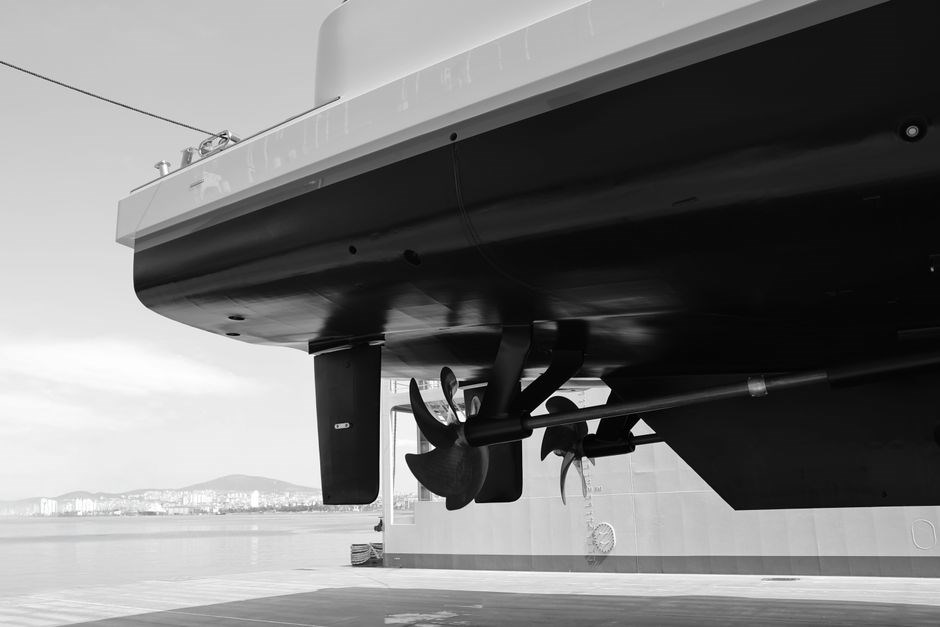

Offshore I Series propellers are engineered for maximum grip and carrying power in demanding offshore conditions. They feature a larger diameter and a moderate pitch that delivers high thrust at low to mid‑RPM ranges, making them ideal for heavy‑draft vessels, fishing boats, and workboats that require robust pulling power. The blade geometry is optimized for stability, with a slightly swept‑back shape that reduces vibration and improves handling in rough seas. Constructed from high‑strength aluminum alloys, the Offshore I series offers excellent corrosion resistance and durability, ensuring long service life even when exposed to saltwater and harsh marine environments. Typical specifications include a 5‑to‑6‑blade configuration, diameters ranging from 12 in to 14 in, and pitch options from 5.0 in to 6.5 in, allowing owners to fine‑tune performance for specific engine horsepower and vessel size. Many users report noticeable improvements in acceleration, especially when pulling heavy loads, and a smoother ride due to reduced blade loading. Because of its focus on power rather than speed, the Offshore I is often paired with lower‑to‑mid‑power Yamaha outboards (e.g., 30 HP–80 HP) but can also be matched to higher‑power models with proper tuning. Maintenance is straightforward: regular cleaning, inspection for blade damage, and occasional re‑balancing keep the prop in peak condition. Overall, the Offshore I Series delivers reliable, high‑thrust performance for offshore operators who prioritize pulling capability and stability over top‑speed efficiency. Its design ensures reliable performance.!!
Offshore II Series
Offshore II Series propellers are the speed‑oriented counterpart to the Offshore I line, engineered to maximize thrust efficiency at higher RPMs and deliver superior top‑speed performance today. They feature a smaller diameter—typically 10 in to 12 in—and a higher pitch range of 6.5 in to 8.0 in, reducing blade loading and allowing the engine to run at lower idle speeds while still producing ample thrust. The blade geometry is streamlined, with a pronounced sweep and a thinner airfoil profile that cuts through water with minimal resistance. Constructed from high‑strength aluminum alloys, the Offshore II is lightweight yet durable, offering excellent corrosion resistance for saltwater service. The 4‑to‑5‑blade configurations provide a good balance between acceleration and cruising efficiency. Many users report noticeable increases in straight‑line speed, especially when cruising at 20 knots or higher, and a ride in seas. Because the prop is optimized for speed, it is often paired with Yamaha outboards (e.g., 80 HP–150 HP). Maintenance is simple: clean after each run, inspect for blade damage, and perform periodic balancing. Installation requires careful attention to blade pitch alignment and shaft clearance; Yamaha recommends using the supplied pitch adjustment screws to tune the blade angle for the engine and hull combination. A tuning practice is to start with the manufacturer’s suggested pitch, then adjust in 0.1‑in increments while monitoring RPM and throttle response. If the engine consistently hits the rev‑limiter at 90 % throttle, a pitch increase of 0.2 in can shift the operating range, allowing higher speeds before the limiter engages. Conversely, if the boat feels at low speeds in the water, reducing pitch by 0.2 in can improve acceleration.
Yamaha’s standard propeller line balances durability, efficiency, and user‑friendly design, making it ideal for day‑cruising, fishing, and light‑towing. These 4‑blade models typically feature a pitch range of 5.0 in to 6.5 in and a diameter of 10 in to 12 in for 30 HP–80 HP outboards. Constructed from lightweight aluminum alloy with anodized finish, they resist corrosion in fresh and saltwater. Standard props deliver smooth acceleration, stable handling, and reliable fuel economy.
High‑performance variants push the envelope with a 5‑blade layout, higher pitch of 6.5 in to 8.0 in, and slightly larger diameter for increased thrust at speed. Blade geometry is streamlined, with sharper leading edges and thinner airfoil sections to reduce hydrodynamic drag. Materials may include high‑strength aluminum or composite blends for superior stiffness and low weight. These props excel in open‑water, offering faster top speed and better acceleration for racing.
Both lines share Yamaha’s rigorous quality control and come with a comprehensive warranty. When choosing, consider vessel use, engine horsepower, and operating conditions. A standard prop offers consistent performance for everyday use, while a high‑performance prop delivers extra thrust and speed for demanding scenarios. Proper installation, regular maintenance, and periodic inspection of blade alignment and pitch will keep each prop performing at peak throughout its service life. These models are available in OEM part numbers, ensuring replacement when needed, and are supported by Yamaha service network global.
Performance Troubleshooting Guide
Check RPM, pitch, and blade alignment. Low speed may indicate too high pitch or worn blades. Excessive rev‑limiter hits suggest insufficient pitch or high load. Inspect for fouling, corrosion, or mis‑rigged shaft. Adjust pitch or replace blades to restore performance. Check alignment, torque, and temperature. now.
Speed and RPM Issues
Verify that the prop pitch matches the engine’s power curve to avoid slow acceleration or rev‑limiter hits. A pitch that is too high increases drag, causing RPM drop and under‑performance, while a pitch that is too low can lead to over‑revving. Inspect the prop for fouling or corrosion; even a small amount of marine growth can raise drag by up to 10 %, lowering top speed; Check the prop shaft alignment; a mis‑aligned shaft creates uneven loading, vibration, and reduced thrust. Ensure the engine’s fuel and ignition timing are set correctly for the current prop. A rich mixture or incorrect timing can reduce power output, manifesting as a sluggish acceleration curve. Confirm the engine’s cooling system is functioning; overheating can trigger the ECU to limit RPM, reducing speed. Systematically addressing each of these factors isolates the root cause of speed and RPM issues and restores optimal performance. A prop that performs well at low speed may become inefficient at high speed if the pitch is too aggressive. Switching to a lower‑pitch model can improve acceleration and reduce the risk of hitting the rev‑limiter. Regular maintenance, such as cleaning the prop blades and checking for cracks, ensures consistent thrust and prolongs the prop’s lifespan. If problems persist after these adjustments, consult a Yamaha service specialist for a detailed inspection now. Cavitation can reduce; look for a blue‑ish film on blades or a thrust drop. If present, lower pitch or raise RPM. Oil temperature within spec prevents ECU RPM limits.
Hitting the Rev‑Limiter

When a Yamaha outboard motor repeatedly hits the rev‑limiter, the engine’s electronic control unit (ECU) is forcing a hard stop to protect the drivetrain from excessive speed. The most common culprit is an over‑pitch propeller that forces the engine to work harder than it can at a given throttle setting. A pitch that is too high increases aerodynamic drag, causing the engine to spool up to its maximum RPM limit before it can translate power into thrust. Another frequent cause is a prop shaft that is not perfectly aligned; a slight mis‑alignment creates uneven loading and a higher load on the motor, which the ECU interprets as a need to limit RPM. Fuel and ignition timing that are off can also reduce the effective power curve, making the engine reach its rev‑limit sooner. The solution is a systematic approach: first, verify that the prop pitch matches the engine’s power rating and the intended operating speed range. A lower pitch prop will reduce drag and allow the engine to stay below the rev‑limit while still delivering adequate thrust. Second, inspect the prop shaft for straightness and proper torque. Tightening the shaft to the manufacturer’s specified torque and ensuring it is centered in the bearing will reduce load spikes. Third, confirm that the fuel filter is clean, the carburetor or fuel injection system is calibrated, and the spark plugs are in good condition; any of these can reduce power output and force the ECU to limit RPM. Fourth, check the cooling system: a clogged impeller or a blocked inlet can raise engine temperature, prompting the ECU to cut RPM to protect the motor. Finally, if the boat is operating in heavy seas or at high speeds, consider switching to a prop model that is designed for high‑speed performance, such as the Offshore II series, which offers a more efficient blade shape and lower pitch for faster cruising. By addressing pitch, alignment, fuel, ignition, and cooling, most rev‑limiter issues can be resolved, restoring smooth acceleration and maximizing the outboard’s performance envelope. Engine owners should also keep an eye on the prop’s wear; a worn blade can increase drag by up to 5 %, pushing the motor toward its rev‑limit. Regular maintenance checks and periodic re‑torquing of the prop shaft will keep the rev‑limiter from being triggered unnecessarily, ensuring the Yamaha outboard delivers reliable performance across all operating conditions.

Application Charts and OEM Part Numbers
Yamaha’s application charts match the correct propeller to a specific outboard engine and boat configuration. Each chart lists OEM part numbers, blade count, diameter, pitch, and recommended operating conditions. The charts are organized by engine horsepower and series, allowing a quick lookup for 2 HP to 300 HP models. For example, a 75 HP Yamaha 4‑stroke engine in a 30‑ft cruiser will reference chart 4‑HP, series 75, where the OEM part number 75‑P‑1234 corresponds to a 4‑blade, 12‑in. diameter, 4‑in. pitch prop. The charts provide a “Revision” column that tracks changes to part numbers when Yamaha updates a design, ensuring replacement parts are compatible with the latest firmware and mechanical tolerances. For offshore applications, the charts include the Offshore I and Offshore II series, each with distinct blade shapes and pitch ranges. The OEM part numbers are formatted as “XX‑P‑YYYY,” where XX is the horsepower, P denotes prop, and YYYY is the unique identifier. When ordering, it is essential to verify the part number against the chart for the exact engine model and serial number, as mismatches can lead to improper fit, increased vibration, or premature wear. Yamaha’s online database allows users to download PDF versions of the charts, and the company’s technical support can confirm the correct part for any specific configuration. By consulting the application charts and using the OEM part numbers, owners can confidently select the propeller that delivers optimal performance, fuel economy, and longevity for their Yamaha outboard motor.
These charts list shaft adapters and blade caps, ensuring installation kit is available. Always cross‑check the chart’s revision date before ordering to avoid obsolete part numbers etc.!!!